

Cotsen Textile Traces Roundtable: Global Equine Cultures
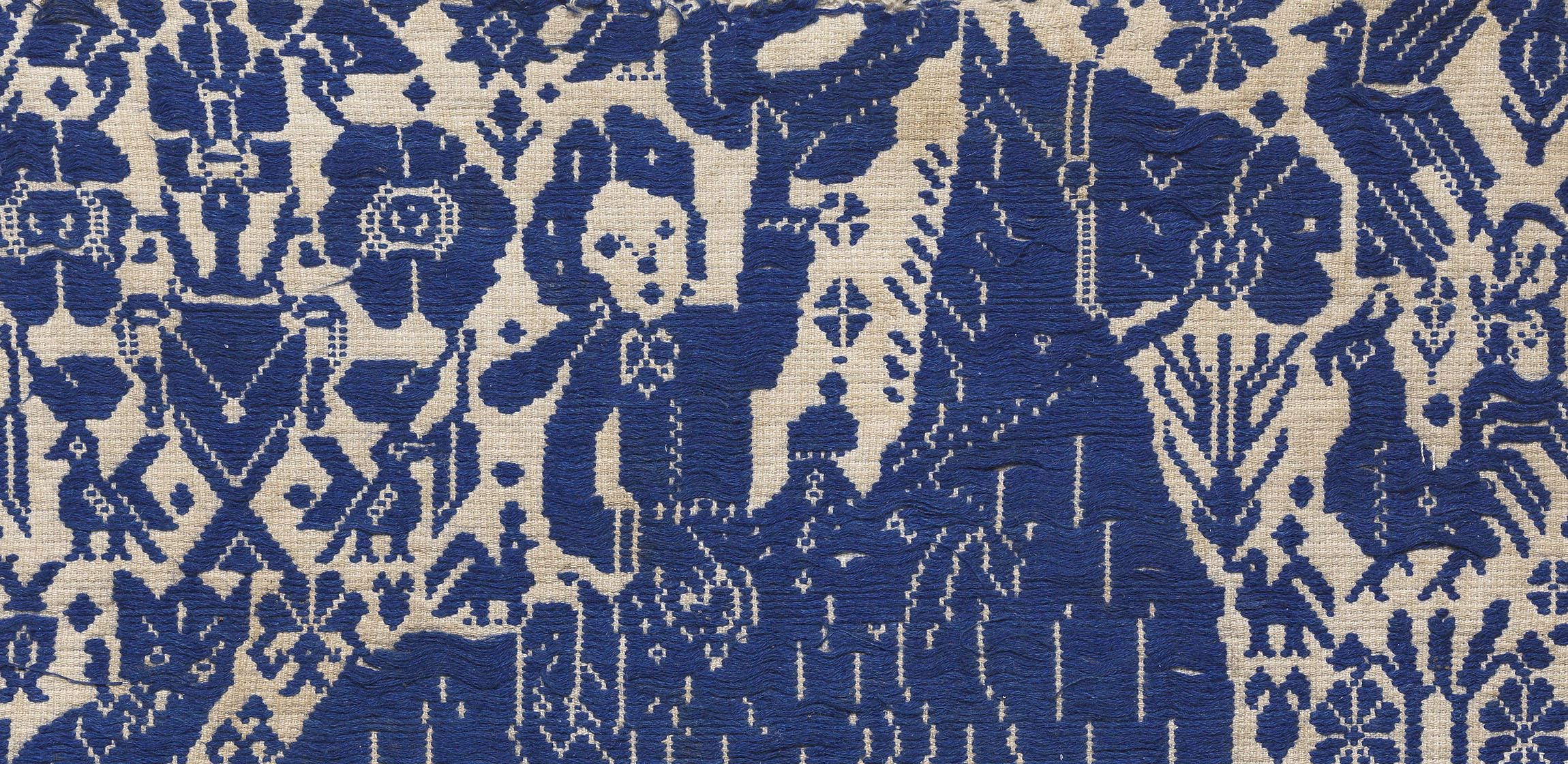
Hosted by the Cotsen Textile Traces Study Center, the Global Equine Cultures roundtable brings together an interdisciplinary panel of distinguished professionals, emerging scholars and artists to present new research examining the history of human-horse interaction as expressed in textiles. Panelists explore the subject across a variety of geographic and cultural perspectives. This roundtable complements the exhibition Adorning the Horse: Equestrian Textiles for Power and Prestige.
Keep reading to see the list of panels and speakers, or download the complete schedule (PDF).
The roundtable is made possible through support from the Cotsen Textile Traces Study Collection Endowment.
About the Exhibition
For millennia, horses have captivated humans with their beauty, strength and majesty. From Türkiye to Japan, civilizations have elaborately costumed these prized animals. In Adorning the Horse: Equestrian Textiles for Power and Prestige, a magnificent selection of saddle blankets, horse covers and other equestrian textiles from the past 1,300 years communicates the significance and status of horses and their riders. Learn more about the exhibition
About the Cotsen Textile Traces Study Center
The museum’s Cotsen Textile Traces Study Center is dedicated to textile research and houses the Cotsen Textile Traces Study Collection, which represents a lifetime of collecting by business leader and philanthropist Lloyd Cotsen (1929-2017). One of the world’s most significant textile study collections, it comprises nearly 4,000 fragments dating from antiquity to the present, offering insights into human creativity around the world. Learn more about the center
How to Participate
This program is free and will take place online. To participate, please register in advance to reserve your space. Once you have registered, we will email you links and details for joining each day of the roundtable on Zoom. We will also email registered participants a program with a detailed schedule.
Schedule
Thursday, February 26, 10 a.m.-12:30 p.m.
10:00-11:00 a.m.
Welcome Remarks: Introduction to the Roundtable
Splendid Horses: The Ancient History of Fancy Grooming and Tack
Sandra L. Olsen, zooarchaeologist, previously University of Kansas, Kansas
Ply-Split Braiding: Fly Fringes for Horses and Contemporary Basketry
Helen Leaf, artist, United Kingdom
11:00-11:10 a.m.
Break
11:10 a.m.-12:10 p.m.
Equestrian Chic: The Horse as Status Marker on Textile Garments
Lonneke Delpeut, Ph.D. candidate, Egyptology, University of Vienna, Austria
Woven Legends: Equestrian Motifs on 20th-Century Japanese Propaganda Kimonos
Methi Satyanarayana, M.A. Museum Studies, George Washington University, Washington, D.C.
Korean Horsehair Craft: History, Techniques and Applications
Sim Yeon-Ok, honorary professor of Traditional Arts and Crafts, Korea National University of Cultural Heritage, South Korea
12:10 p.m.-12:30 p.m.
Q&A
Friday, February 27, 10 a.m.-12:30 p.m.
10:00-11:15 a.m.
Welcome Remarks
Charreria and Mexican Textiles
Alejandro de Avila Blomberg, founding director of the Ethnobotanical Garden and curator at the Oaxaca Textile Museum, Mexico
Racing in Circles: The Palio di Siena and the Origins of Movement in Emilio Pucci's Designs
Eugenia Lollini, M.A. Museum Studies, George Washington University, Washington, D.C.
Riders, Weavers and Iconic Horses: Equine Imagery and Gendered Aesthetics in Sumba's Textile and Ritual Cultures
Janet Alison Hoskins, professor of Anthropology and Religion, University of Southern California, California
11:15-11:20 a.m.
Break
11:20 a.m.-12:20 p.m.
Transcultural Interactions in Art: Re-examining Flying Horses Across Medieval Eurasia
Yuxi Pan, Ph.D. candidate, History of Art and Archaeology, SOAS University of London
Reinterpreting a Yao Priest's Hat
Xuexin Liu, M.A. Museum Studies, George Washington University, Washington, D.C.
Hide and Cover
Marianne Kemp, artist, the Netherlands
12:20-12:30 p.m.
Q&A